
Migration of dns-controller-manager to Next Generation
This document outlines the steps taken to migrate to the next generation of dns-controller-manager from external-dns-management.
Architecture Changes
The nextgeneration DNS controller manager makes now use of the authoritative DNS servers for looking up the current state of DNS record whenever possible. This is a significant change from the previous implementation, which relied on cached data and periodic synchronization to avoid running into rate limits imposed by DNS providers.
In the standard use case of public hosted zones, the next generation controller queries the authoritative DNS servers directly to determine the existing DNS records.
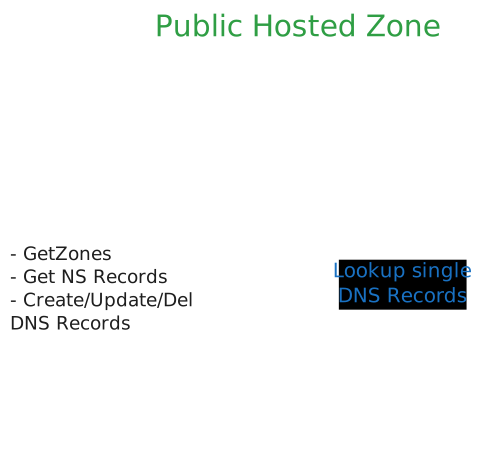
If the authoritative DNS servers are not accessible (e.g., for private hosted zones), the next generation controller falls back to using the provider's API to fetch the current state of DNS records.
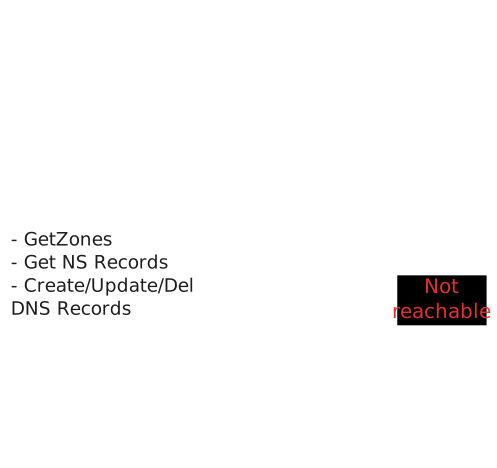
It also allows to make far-reaching simplifications to the overall architecture of the DNS controller manager and its deployment.
There is no longer a need for separate caching layers in the form of a seed-wide dns-controller-manager and the Central DNS proxy to avoid high load by the periodic synchronization. Instead, for reading the current state of DNS records, the next generation controller directly queries the authoritative DNS servers or falls back to the provider's API if necessary.
Old Architecture
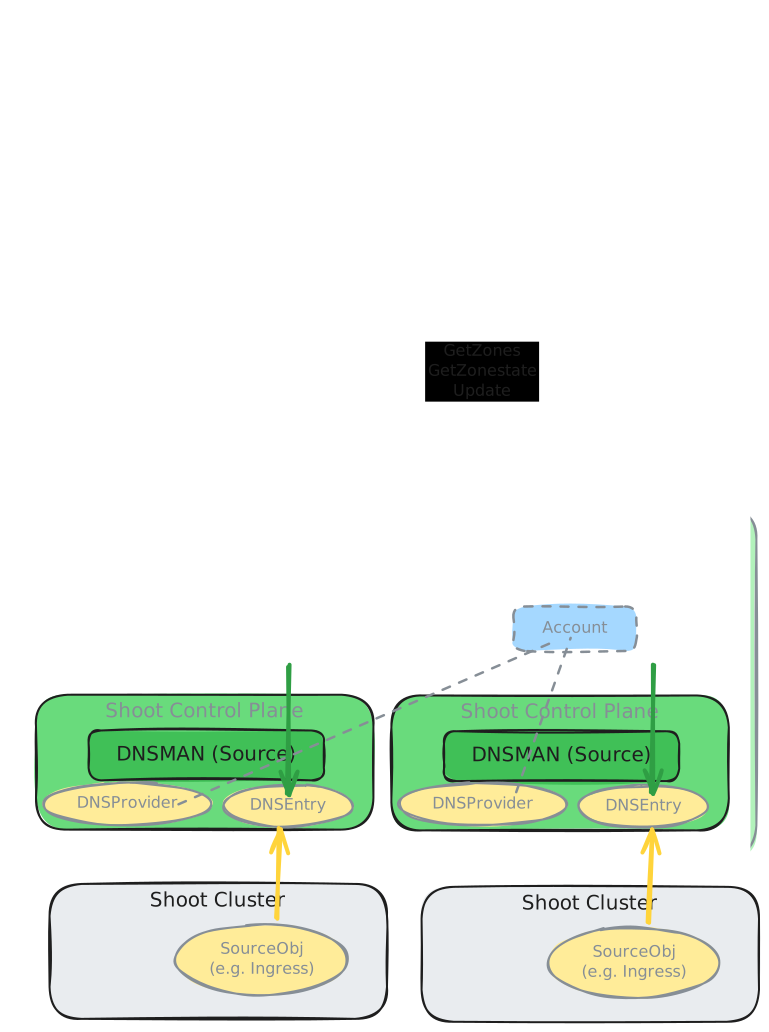
DNS Controller Manager in shoot-dns-service extension namespace
- Manages DNSProviders and DNSEntries for all control planes (and all other namespades)
- DNSProvider with same credentials map to same "account"
- Complete zone state is cached and synchronised periodically
- batches if supported by handler (but only per namespace = group)
- uses zone reconciliations
DNS Controller Manager in control plane ("shoot-dns-service" deployment)
- watches shoot cluster for annotated source objects, DNSEntries
- manages "slave" DNSEntries in control plane namespace
- if enabled, may replicate DNSProviders from shoot cluster to control plane namespace
- does NOT communicate with providers
DNS Central Proxy in Garden Runtime Cluster
- centralised access to zone of landscape's default domain to avoid load for synchronisation for each seed
New Architecture
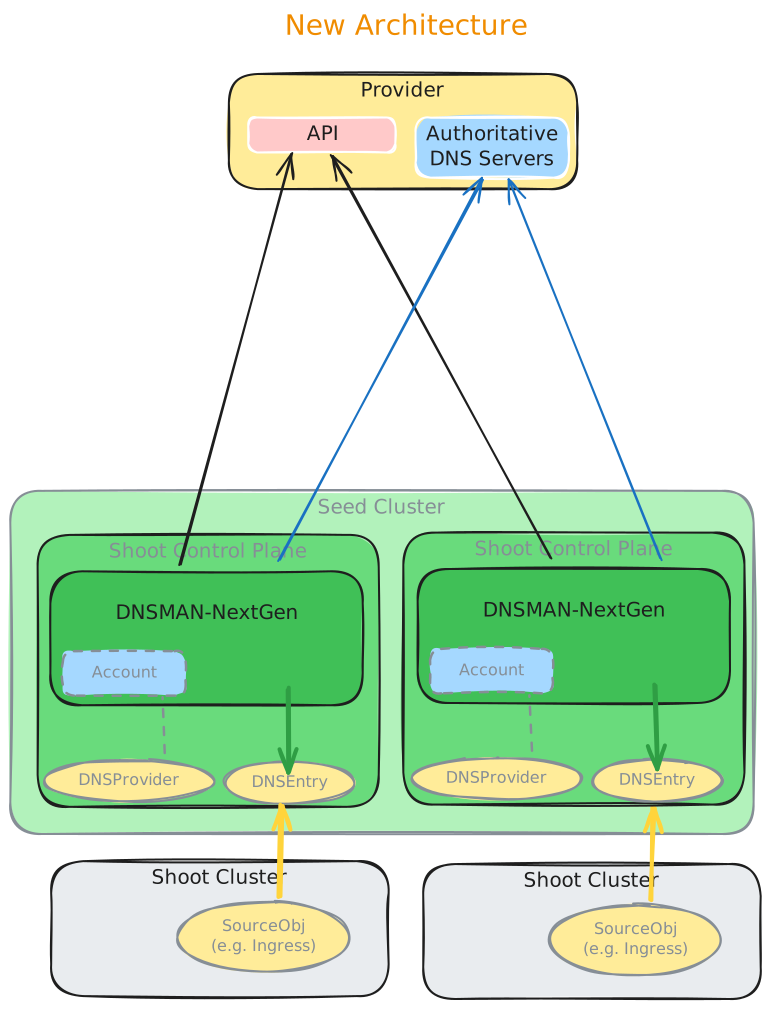
DNS Controller Manager in control plane ("shoot-dns-service" deployment)
Distributed share nothing dns-controller-manager-nextgeneration deployments per control plane namespace
- Manages DNSProviders and DNSEntries for its namespace only
- DNSProvider with same credentials map to same "account"
- NO caching/sync of zone state
- NO read operations per API (if authoritative DNS server reachable)
- uses DNS queries to authoritative DNS servers during reconciliation to decide if any changes need to be written (short-time cached according to TTL of query results)
- same source controllers logic as for old dns-controller-manager
Co-existence Strategy During Migration Phase
To ensure a smooth transition from the old dns-controller-manager to the next generation version, both controllers can run simultaneously within the same seed. This co-existence strategy allows for gradual migration of shoot clusters to have early feedback on the new implementation while still relying on the stable old controller.
As the old architecture involves a central dns-controller-manager in the seed that manages all DNSProvider and DNSEntries resources for all shoot clusters normally, the migration strategy involves the introduction of a second DNS class. The old controller continues to manage resources without an annotation dns.gardener.cloud/class (or explicit default class dns.gardener.cloud/class=gardendns). To enable the next-generation controller, the providerConfig of the shoot-dns-service extension in the shoot manifest must have the field useNextGenerationController: true. In this case, the shoot-dns-service extension will deploy the new controller with target class gardendns-next-gen. All DNSProvider and DNSEntry resources created by the shoot-dns-service extension or the new controller will then have the annotation dns.gardener.cloud/class=gardendns-next-gen using a special migration mode. Existing resources are updated in-place.
From the end-user perspective, this migration is transparent.
Back migration
If the field useNextGenerationController is set to false again, the class annotations will be removed from all DNSProvider and DNSEntry resources. The DNSProvider managed by the shoot-dns-service extension will be updated in-place. The DNSEntry and DNSProvider resources managed by the dns-controller-manager deployment named shoot-dns-service are updated in-place as well. This uses a feature of the old controller to allow multiple target classes. By specifying gardendns,gardendns-next-gen as target classes, the old controller will manage resources of both classes and uses the first one on the resources.